Supply chain glossary
Milk Run
What a milk run is, how a fixed collection route differs from direct deliveries, and why its main benefit is smaller, more frequent shipments.
23. november 2026
3 min
A milk run is a transport route on which one vehicle collects goods from several suppliers, or delivers to several sites, in a fixed sequence and on a fixed schedule. Instead of each supplier shipping when it has a full truckload, the vehicle comes at agreed times and takes the quantity that is due, so deliveries become smaller and more frequent.
The term comes from the dairy rounds that collected milk from farms on a set route. In manufacturing, an inbound milk run supplies a plant from regional suppliers and can carry returnable containers back on the same route; in retail and distribution, an outbound milk run serves several stores from one distribution center (DC). Inside a plant, the same principle drives tugger trains that supply production lines on a fixed loop, which belongs to intralogistics rather than to transport planning.
Milk Run in practice
The main effect of a milk run is on inventory, not on freight cost. A supplier that delivers 10 pallets once a week leaves the plant with an average cycle stock of 5 pallets, half of each delivery. Collected daily on a milk run, the same 10 pallets arrive as 2 pallets five times a week, and the average cycle stock falls to 1 pallet. Four such suppliers on one route add up to about 8 pallets per run, which fits a smaller vehicle than a full truck, but that vehicle runs five times a week instead of four separate weekly deliveries. The route pays off when the extra transport costs less than the working capital in inventory and the floor space it frees at the plant.
A fixed route also ties the suppliers to each other. With four stops, 30 minutes of loading at each and three hours of driving, the loop takes about five hours, and a 40‑minute delay at the second stop shifts the third and fourth stops and the arrival at the plant by the same amount unless the schedule has slack. Routes are therefore designed with time windows at each stop and a buffer at receiving. Planning them by distance alone, without loading times, dock capacity and empty containers going back, produces a schedule that cannot be kept.
Logio designs inbound and outbound transport in distribution concepts and distribution network optimization projects, from delivery frequencies and stop sequences to the effect on stock at the receiving site, and tests route variants with realistic delays in dynamic simulation.
Related terms
More supply chain insights
Supply chain glossary
AGV and AMR
What AGVs and AMRs are, how fixed‑path guidance differs from autonomous navigation, and why fleet size follows cycle time, not top speed.
22. november 2026
3 min
Supply chain glossary
Cross‑Docking
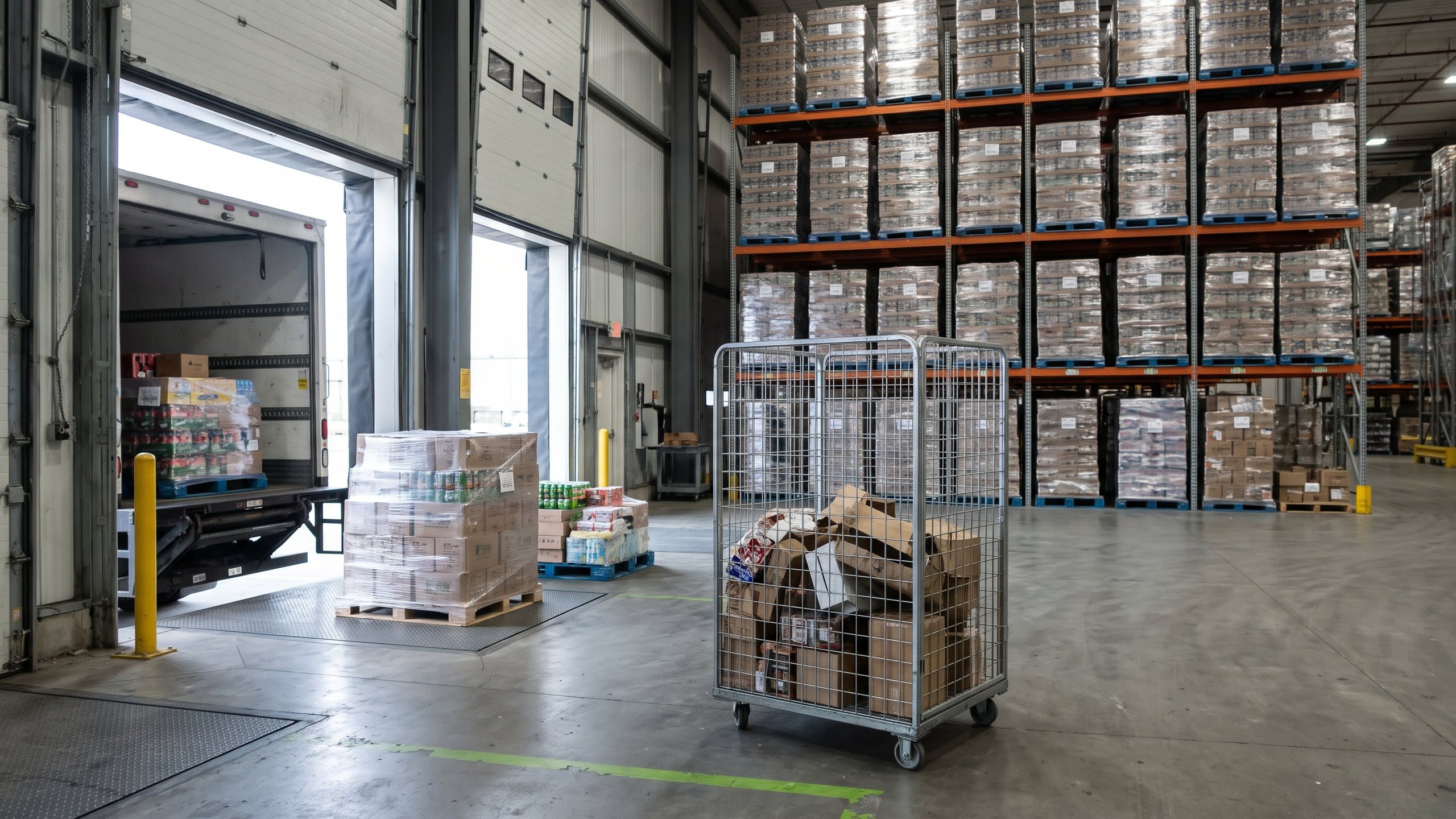
What cross‑docking is, how pre‑allocated and post‑allocated variants differ, and why it moves safety stock from the distribution center to the stores.
19. november 2026
3 min
Whitepapers & ebooks
Vendor‑Managed Inventory: When Handing Replenishment to the Supplier Pays Off, and When It Backfires
Vendor‑managed inventory moves ordering to the supplier but does not remove stock from the chain on its own. When VMI pays off for a retailer, when it backfires, and what to settle before signing.
19. november 2026
10 min