Supply chain glossary
AS/RS
What an automated storage and retrieval system is, why its number of aisles follows peak‑hour throughput and how one crane per aisle shapes the failure mode.
15. november 2026
3 min
An automated storage and retrieval system (AS/RS) is a storage installation in which computer‑controlled machines put loads away into fixed locations and retrieve them without a forklift driver. The machine follows the load: stacker cranes for pallets, miniload cranes and shuttles for totes and cartons, vertical lift modules for small parts.
An AS/RS is run by a warehouse control system that takes transport orders from the warehouse management system (WMS) and decides which machine moves which load. It trades floor area for height and density, and in return it fixes the design for the life of the installation: the number of aisles, the load dimensions and the weight limit are set at the start, and changing them later means rebuilding. That is why the sizing decisions matter more than the choice of supplier.
AS/RS in practice
The number of aisles is set by throughput in the peak hour, not by the number of storage locations. In a design with one crane per aisle, each crane manages a limited number of cycles per hour. Take a pallet crane whose single cycle (one put‑away or one retrieval) takes 90 seconds and whose dual cycle (a put‑away and a retrieval in one trip) takes 130 seconds: in single mode it moves 40 pallets an hour, in dual mode about 55. A warehouse that needs 300 pallet moves in its peak hour then needs six aisles if receiving and dispatch overlap in time, and eight if goods arrive in the morning and leave in the afternoon, because a crane with nothing to bring back cannot combine trips. The receiving and dispatch schedule changes the number of aisles by a third before any supplier is involved.
One crane per aisle also defines what happens in a breakdown: every pallet in that aisle is out of reach until the crane is repaired. If all pallets of a fast‑moving SKU sit in one aisle, one fault turns into a stockout at dispatch. Spreading the stock of each fast mover across at least two aisles costs some travel efficiency and keeps the item available during an outage. The rule belongs in the control system from day one, because redistributing a full warehouse later consumes crane cycles that regular work needs.
Logio sizes AS/RS installations in automated warehousing projects, from the order profile and peak‑hour throughput to the number of aisles and the operating rules, and tests the variants, crane outages included, in dynamic simulation before the tender.
Related terms
More supply chain insights
Supply chain glossary
Cross‑Docking
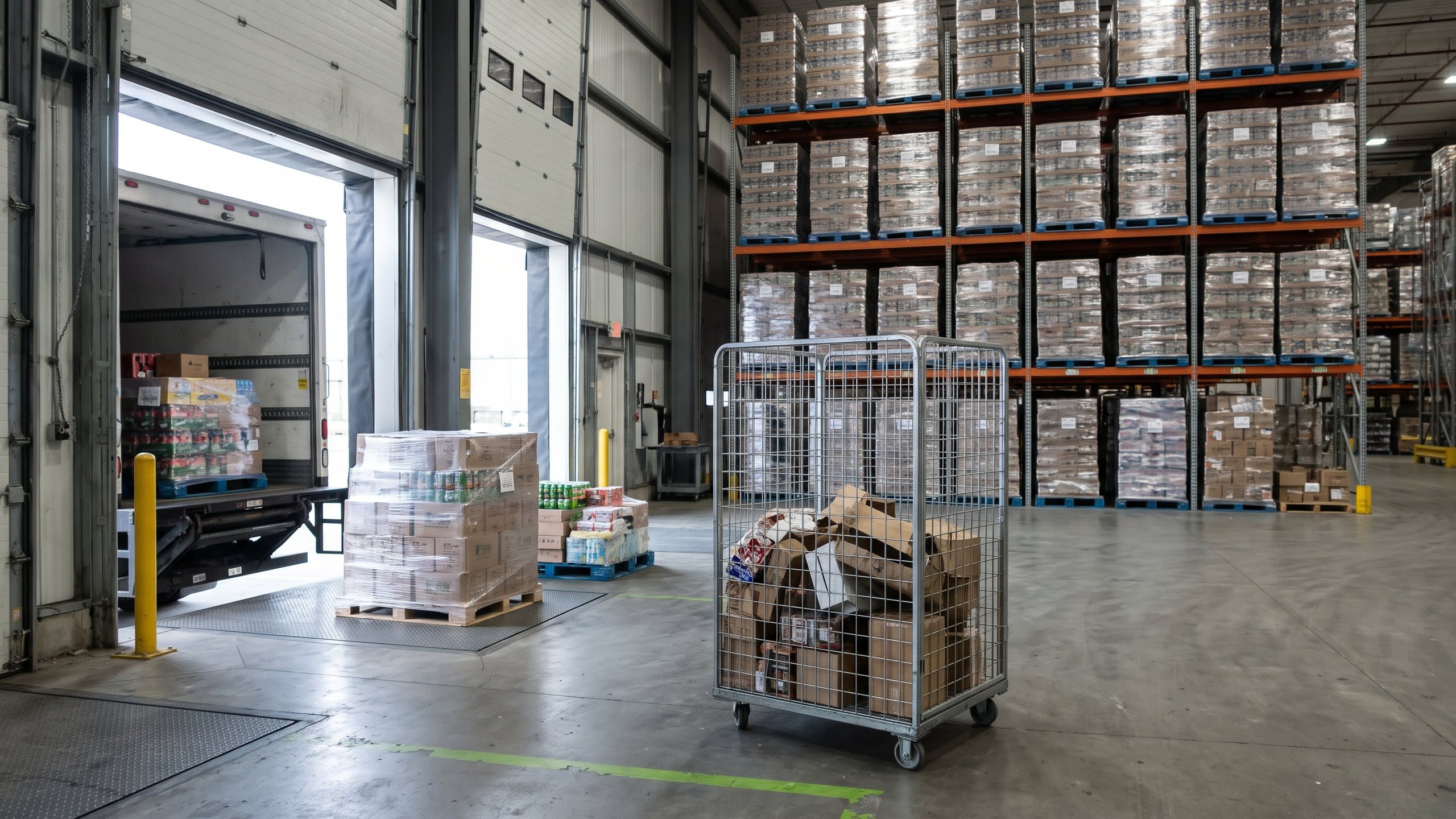
What cross‑docking is, how pre‑allocated and post‑allocated variants differ, and why it moves safety stock from the distribution center to the stores.
19. november 2026
3 min
Whitepapers & ebooks
Vendor‑Managed Inventory: When Handing Replenishment to the Supplier Pays Off, and When It Backfires
Vendor‑managed inventory moves ordering to the supplier but does not remove stock from the chain on its own. When VMI pays off for a retailer, when it backfires, and what to settle before signing.
19. november 2026
10 min
Supply chain glossary
Slotting
What warehouse slotting is, why items are ranked by pick lines rather than units sold, and how location size sets the number of replenishment trips.
18. november 2026
3 min