
Home, Garden & DIY
Digitalizing logistics from family business to European leader
Logio partnered with AGRO CS to transform manual, paper‑based processes into a fully digitalized workflow, creating a clear investment roadmap for future growth.
Outcome
The project provided an independent audit of logistics across multiple locations, resulting in seven prioritized action plans. These plans bridge immediate "quick wins" with long‑term strategic transformation and WMS readiness.
About AGRO CS a.s.
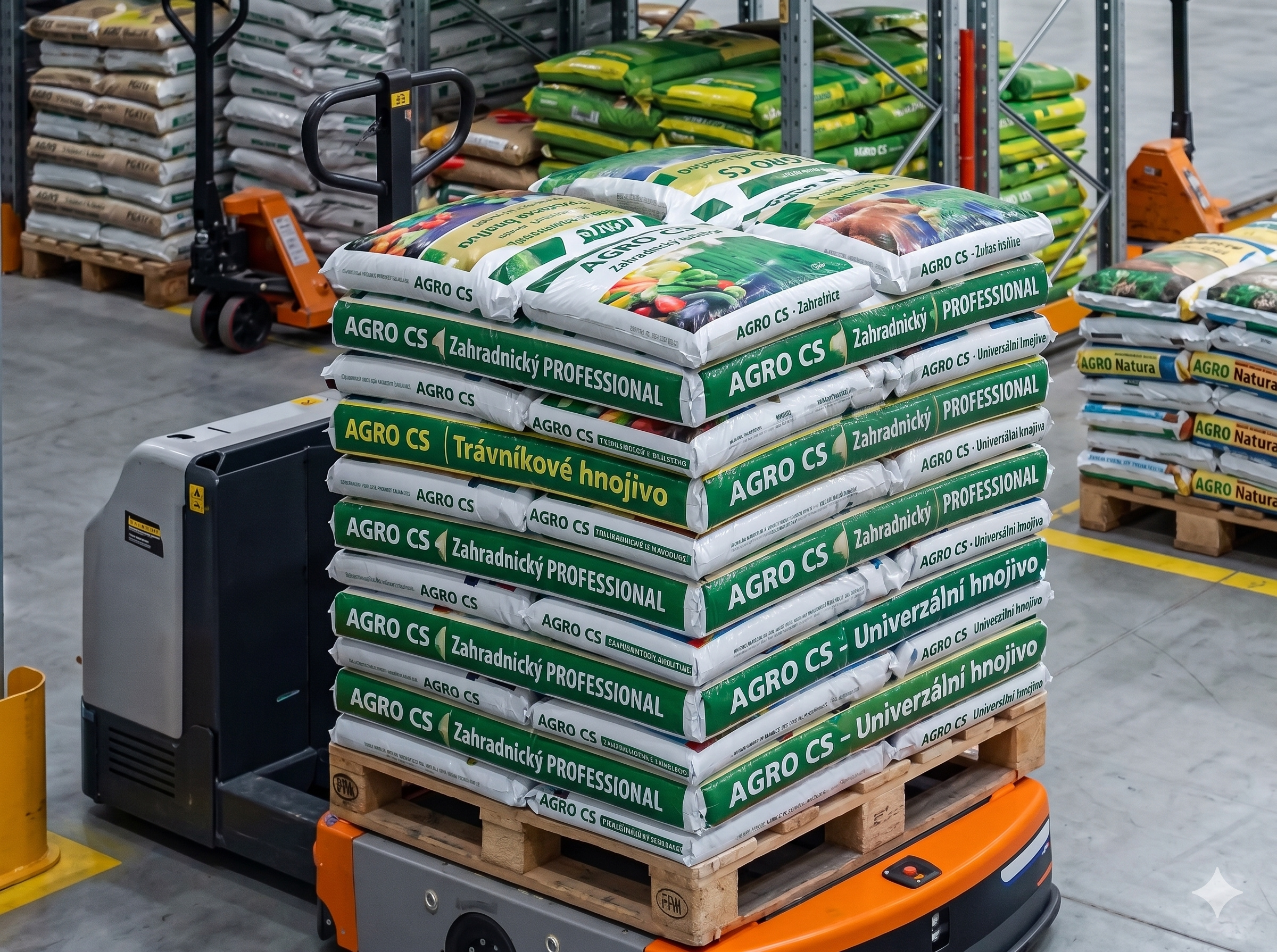
AGRO CS a.s. is a leading European manufacturer and supplier of horticultural substrates, fertilizers, and grass seeds for both hobby and professional markets.
€62 million annual turnover
400+ employees including subsidiaries
Home, Garden & DIY industry leader
Initial challenge
AGRO CS faces a typical challenge for companies that grew out of family businesses and is thus addressing the need to move from a manual or only partially digitalized agenda. This is often dependent on manual interventions, local knowledge of individuals and paper procedures. The goal is a fully digitalized and interconnected workflow with maximum automation. In the audit, we therefore focused not only on changes in logistics, but also on the follow‑up processes that directly affect logistics.

Project goal
The aim of the project was to independently assess the current state of logistics and identify the main operational and data constraints. We then translated the findings into specific and prioritized action plans. The emphasis was on practical output for decision‑making, not just on the analysis itself. This provided management with a quality basis for planning further investments and changes.

Solution
Mapping the path to automated logistic
Logio conducted a deep‑dive audit that connected process mapping with rigorous data analysis to create a scalable logistics foundation.

Solutions implemented
Information Systems Evaluation
Data Visibility & Accessibility
Process Mapping & Analysis

Impact
Clear visibility and a foundation for growth
Higher transparency
Elimination of data inconsistencies and more precise tracking of warehouse movements.
Optimized capacity
Reduced operational pressure on warehouses through better management of finished goods and raw materials.
Reduced person‑dependency
Standardized processes and digitalization reduce the reliance on the specific manual experience of individuals.
Faster expedition
Reorganized dispatch processes and coordinated loading reduced paper administration and improved speed.
WMS readiness
The audit established the necessary process hygiene and data structure required for a successful WMS implementation.

The audit provided us with an independent view of logistics across locations and helped accurately name the changes we will have to implement for the further development of the company. Some of them are applicable practically immediately, others require a longer preparation horizon and the realization that they will affect the entire company, not just logistics processes. In any case, today we have a clearer roadmap for increasing not only logistical efficiency.
Ready to scale your logistics beyond manual processes?
If your growth is limited by paper‑based workflows and individual knowledge, we can help you build a data‑driven roadmap. Let’s talk about how a logistics audit can prepare your business for full digitalization and WMS integration.
We tackled many supply chain challenges

Scaling parcel delivery for a furniture retailer
Peak season parcel operations stabilized through lean changes and a clear scale up plan to 2,500 parcels per day with up to 40 percent productivity upside.
Up to +40 percent productivity potential identified
Capacity blueprint up to 2,500 parcels per day
Three action plans by investment level delivered

New warehouse design for Svět svítidel (Donoci)
A compact expedition warehouse concept with conveyors and clearly defined processes, integrated into the existing campus, cuts packing time and enables very high daily throughput.
Up to 45,000 items shipped per day capacity
–70% packing time per order