Infographics
Chilling logistics: how ice cream travels through the cold supply chain
Ice cream has to hold −18 °C from the maker to your freezer. A few minutes on the loading dock and all that's left is icy mush. What the cold supply chain has to get right.
17. august 2026
5 min
A perfect ice cream experience is not only about the recipe. It is about whether anyone let the temperature slip on the way from the maker to you. Czechs eat 52.6 million litres of ice cream a year, and every litre travels through a chain that cannot be allowed to break. So what challenges does the cold supply chain face?
Why ice cream has to hold −18 °C
On the way from the maker to you, ice cream passes through several transfer points. Without unbroken freezing, a few minutes on the loading dock turn a crisp treat into soft mush.
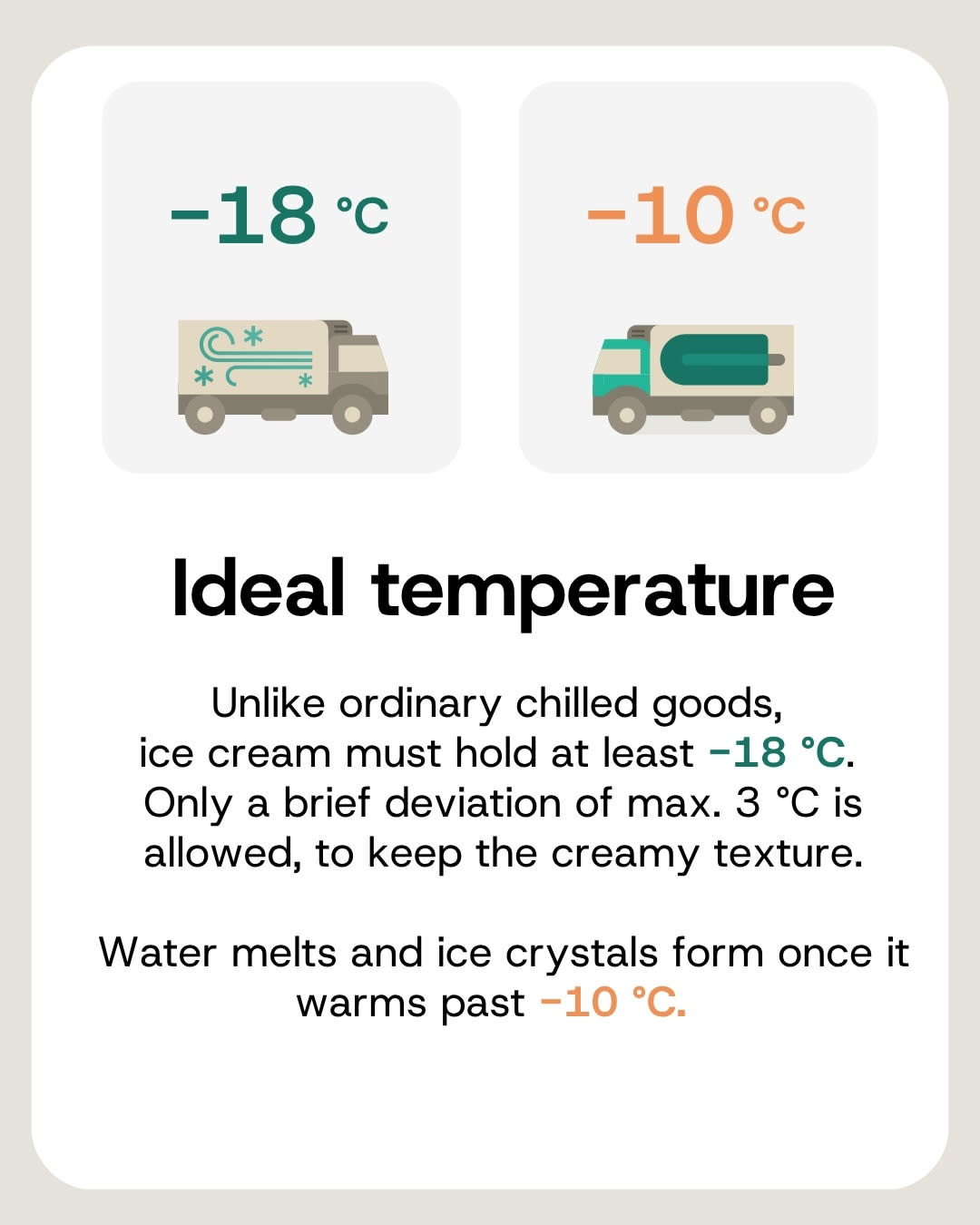
Unlike ordinary chilled goods, ice cream must hold at least −18 °C. Only a brief deviation of max. 3 °C is allowed, to keep the creamy texture. Water melts and ice crystals form once it warms past −10 °C.
Where the chain usually breaks
In a cold store or truck the temperature is low and stable. Each time the doors open, it shoots up.
The riskiest leg is the trip home — bag, car, tram, lift. There the ice cream is no longer in a controlled environment.
Why cold stores are automating
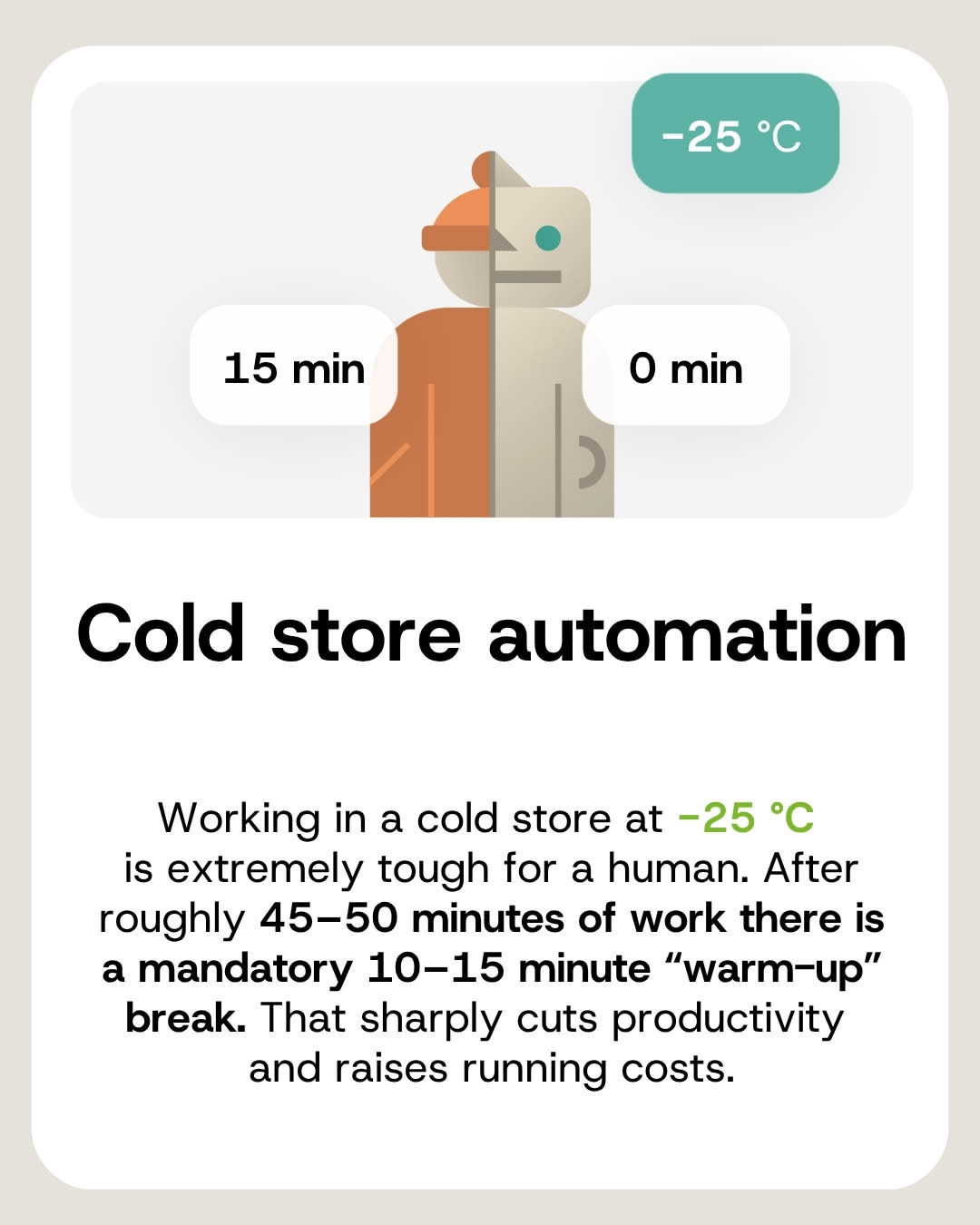
Working in a cold store at −25 °C is extremely tough for a human. After roughly 45–50 minutes of work there is a mandatory 10–15 minute "warm‑up" break. That sharply cuts productivity and raises running costs.
That is exactly where we see automation arriving fastest: systems that work reliably in sub‑zero conditions, where people run into physical limits. Designing warehouses like that, from concept through to delivery, is one of the things we do at Logio.
How the temperature chain is documented
Smart IoT sensors watch the chain right on the pallets. They track temperature, humidity and shocks, making it possible to react to any anomaly at once.
But someone has to sit above that data, turn it into a decision and act on an anomaly before it shows up in quality. That layer — data, visibility, action — is what we build.
What cooling costs
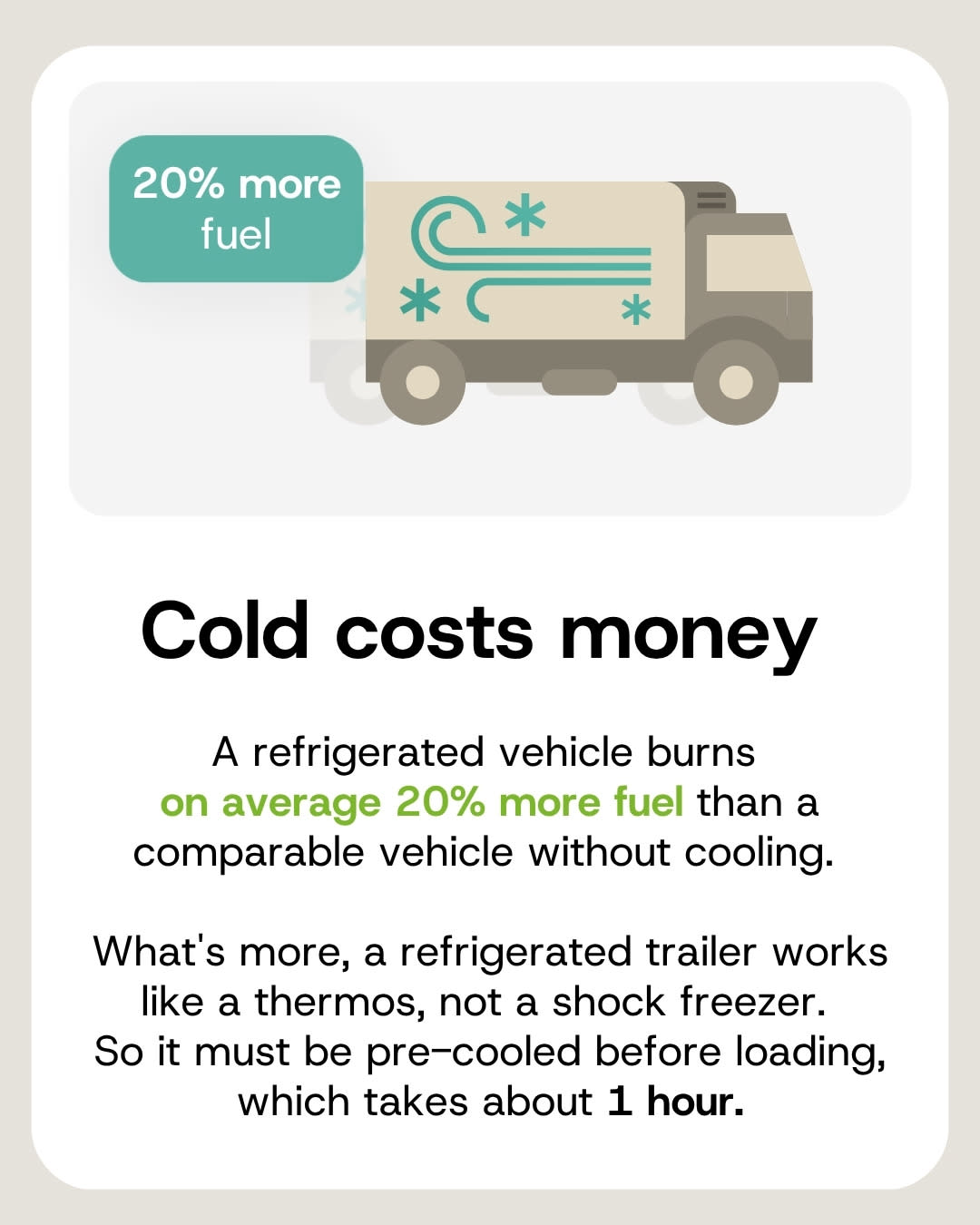
A refrigerated vehicle burns on average 20% more fuel than a comparable vehicle without cooling.
A refrigerated trailer also works like a thermos, not a shock freezer. So it must be pre‑cooled before loading, which takes about 1 hour.
What heat and humidity do to sales
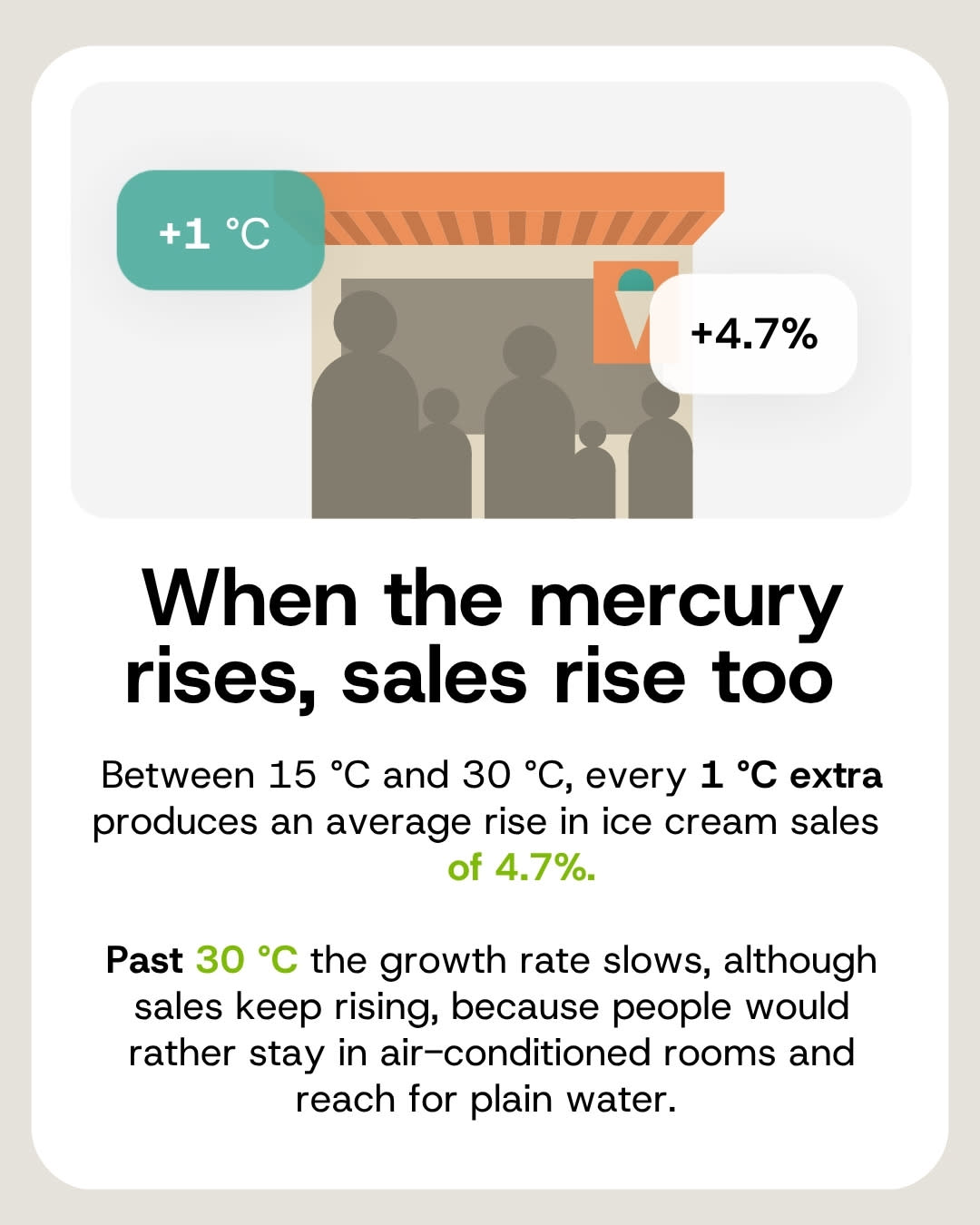
Between 15 °C and 30 °C, every 1 °C extra produces an average rise in ice cream sales of 4.7%. Past 30 °C the growth rate slows, although sales keep rising — people would rather stay in air‑conditioned rooms and reach for plain water.
Humidity matters too. As soon as it rises, interest in rich creamy flavours drops and people switch en masse to light fruit sorbets.
Czechs and ice cream, in numbers
Each year Czechs eat 52.6 million litres of ice cream, enough to fill 21 Olympic pools. That works out at 4.8 litres per person a year.
Abroad, cream and water ices rule. Czechs love quark (Czech curd cheese) — Míša bars have been around since 1962. Quark is logistically tougher: more sensitive to temperature swings and to freshness before freezing.
72% of Czechs eat ice cream on the go. An impulse purchase makes the last mile extremely expensive for logistics — thousands of small freezers at pools, campsites and corner shops need stocking reliably.
How not to harm ice cream on the way home
The cold chain isn't just technology. It's an interplay of people, processes and data. But it ends at your home.
- Shopping tactics. Make frozen goods the last thing you pick up in the shop and carry them home in a cooler bag.
- The right spot in the freezer. Never put ice cream right behind the door, where the temperature swings most. It belongs at the back or bottom.
- Never refreeze twice. Every time the texture softens, ice crystals form.
- Shelf life. At a stable −18 °C, unopened ice cream keeps perfect quality for 3 to 4 months.
What this means for sales planning
"Relying on something as changeable as a weather forecast when planning sales makes no sense in practice. The way to really outsmart summer heat — and always have enough ice cream in the freezers — is a combination of long‑term seasonal trends, fast adaptation to actual sales and well‑calculated safety stock."
Zuzana Vlčková, Product Owner
Sources
- Consumption and market data: retail market surveys by the Czech Ministry of Agriculture, NielsenIQ and Euromonitor (2024/2025)
- Legislation and standards: the ATP Agreement (international carriage of perishable foodstuffs) and SZPI regulations
- Technical parameters: GCCA (Global Cold Chain Alliance) — standards for recrystallisation and frozen food storage
- Weather impact study: Zhen Zou (2025) — Correlation Analysis Between Ambient Temperature and Ice Cream Sales
Full infographic · PDF, 24 pages
All three parts in one file, with the figures and sources included.
Chilling logistics — full infographic (EN)
PDF, 3.18 MB
More supply chain insights

Whitepapers & ebooks
ERP and WMS Go‑Live: What Actually Breaks on the Planning Side
Vendor checklists cover the project. This covers the planning side: master data, stock accuracy, the frozen window and the forecast dip after cutover.
21. september 2026
13 min
Supply chain glossary
Phantom Inventory
Stock the system records as available while the shelf is empty: why replenishment stays silent and how to detect it.
21. september 2026
3 min

Supply chain glossary
Multi‑Echelon Inventory Optimization (MEIO)
Multi‑echelon inventory optimization sets stock levels across every stage of a supply network at once, instead of optimizing each location separately.
18. september 2026
3 min