
Grocery & convenience
Increasing on‑shelf availability while reducing inventory across 150+ stores
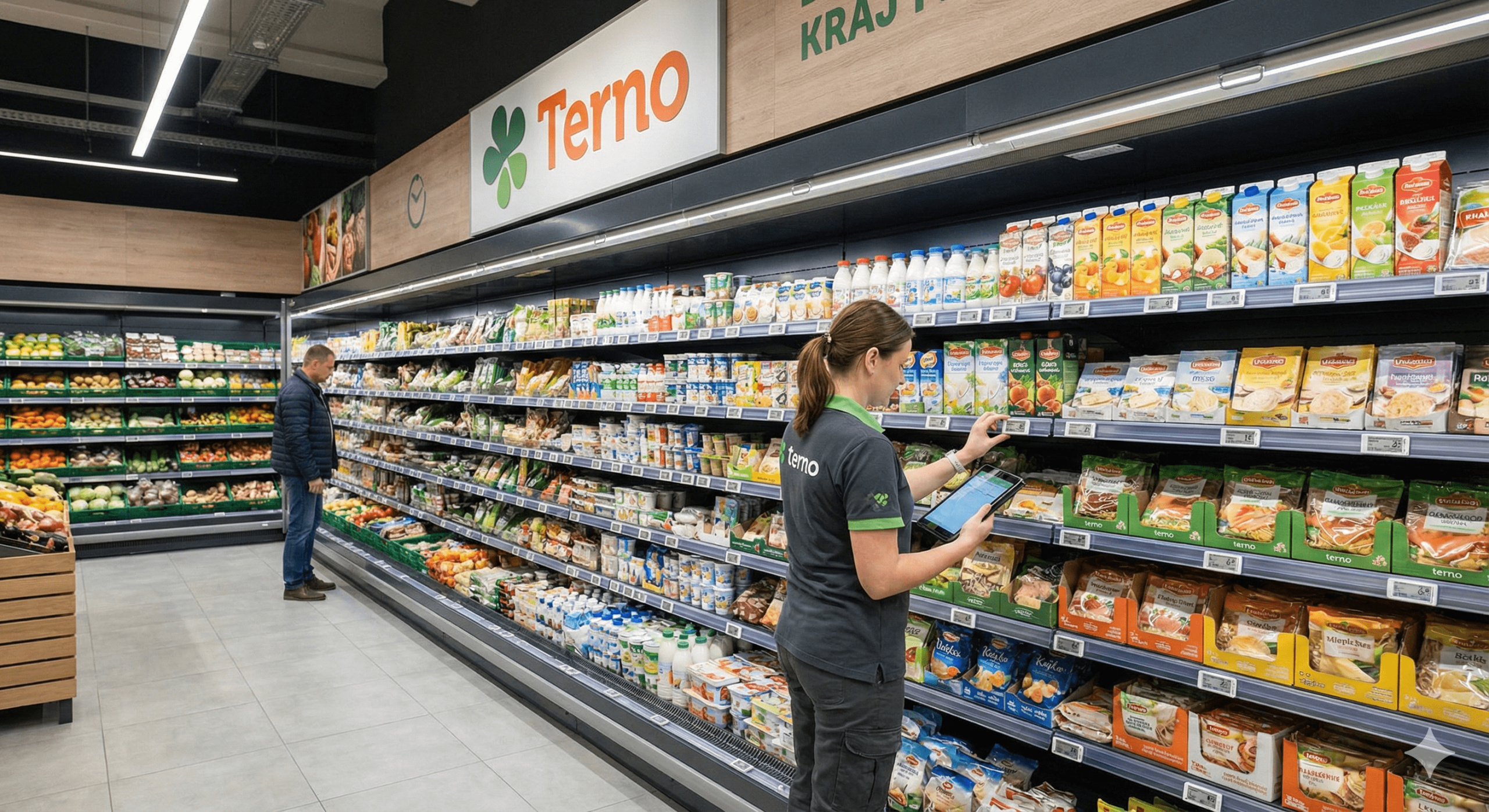
Logio partnered with Terno to implement the Veritico STOCK platform, transitioning the Slovak grocery chain from manual ordering to an automated, prediction‑based replenishment system.
Outcome
The implementation successfully balanced high product availability with leaner stock levels, significantly reducing manual workloads for store managers and improving fresh food turnover.
Increase in availability by
2.13%
Inventory turnover increased by
10%
Work per store/day
- 1 hour
About Terno
Terno is a traditional Slovak food retailer established in 1978, operating a diverse network of over 150 stores ranging from local shops to large supermarkets. The company’s portfolio includes the KRAJ, TERNO, and Moja Samoška brands, all currently undergoing a massive modernization of both physical infrastructure and digital processes.
150+ stores
3 retail brands
Established in 1978
Initial challenge
Store managers were responsible for manual ordering based on subjective estimates, leading to inconsistent on‑shelf availability, excessive waste, and significant time spent on administrative tasks.

Project goal
To automate the retail ordering process using demand forecasting to ensure optimal stock levels, reduce food waste, and free up store staff for customer‑facing activities.
Solution
Building a predictive engine for Slovak grocery retail
Logio deployed the Veritico STOCK system to replace manual estimates with data‑driven forecasts tailored to various store formats.

Solutions implemented
Inventory & Replenishment
Demand Forecasting & Inventory Optimization
Replenishment & Allocation Management

Impact
Optimized stock, automated growth
Increased availability
Achieved a 2.13% increase in goods availability while simultaneously lowering overall inventory levels.
Significant time savings
Reduced the daily administrative workload of store managers by more than one hour per store.
Improved inventory turnover
Enhanced the efficiency of goods movement with an improvement in inventory turnover rate exceeding 10%.
Reduced waste and markdowns
Minimized write‑offs caused by over‑ordering and inaccurate sales estimates by store staff.
Error prevention
Eliminated downtime and stockouts caused by human error in the manual ordering process.

The automated ordering system was a significant milestone in the automation of the sales process for Terno. We evaluated the construction of orders based on sales prediction as the most suitable approach, which was confirmed in pilot operation. In addition to saving time, we increased availability for the customer and, above all, avoided downtime in case of incorrect orders. Likewise, thanks to automation, we managed to largely reduce write‑offs caused by incorrect sales estimates by store managers. The system met our expectations and we are currently planning to use the full potential of sales forecasting for other processes as well.
Take your grocery operations to the next level
If your retail replenishment is hindered by manual errors and high waste, we can help you automate. Let’s talk about how predictive inventory management can transform your bottom line.
We tackled many supply chain challenges
Inventory optimization for GGT
Automated forecasting and replenishment across 800+ branches delivered higher sales, leaner stock and faster ordering.
+5% revenue
–15% stock
–60% time to create orders
Automated stock and promotion planning for Jednota Mikulov
Jednota Mikulov replaced manual order management with Veritico STOCK and Veritico PRICE, raising product availability from 96% to 98% and cutting order creation time by 90%. Customers experience fuller shelves and better planned promotions while store staff spend far less time on administration.
Product availability improved from 96% to 98%
Inventory turnover time decreased by 8%
Time needed to create orders shortened by 90%