Infographics
Valentine's roses: one bouquet equals a 100 km drive
One bouquet of imported roses carries the carbon footprint of a 100 km drive, and 60× more than a local carrot. Why two thirds of our fruit and vegetables are imported, and what to do about it.
10. february 2026
3 min

Valentine's Day has settled into Czech habits and a quarter to a third of us mark it every year. Men reach for the classic: cut flowers. The romantic gesture has a catch — because it falls in February, the flowers have to be grown in energy‑hungry greenhouses or flown in from half a world away.
100 km = 1 bunch. A single bouquet of imported roses leaves the same carbon footprint as a car driving 100 kilometres.
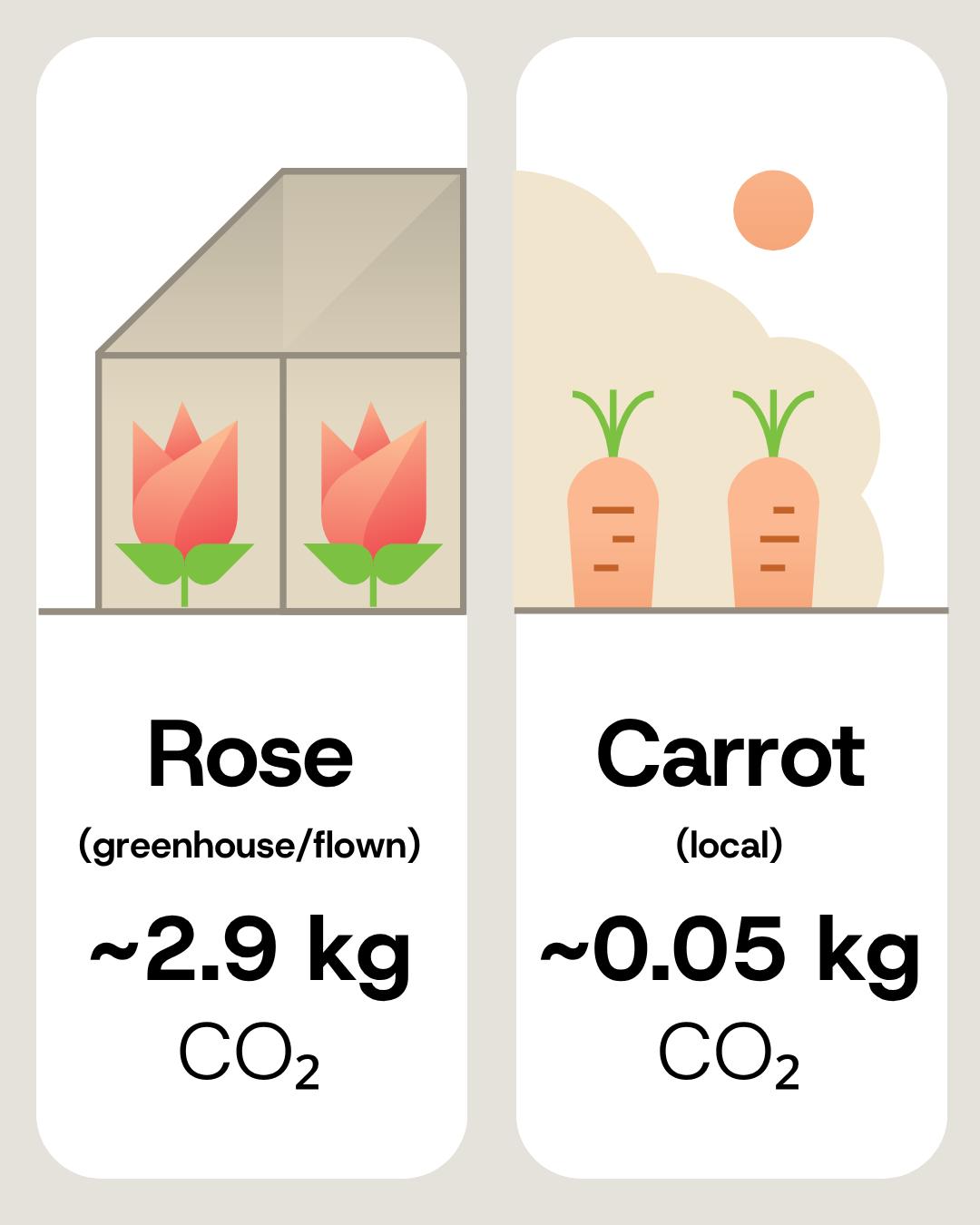
60× worse than a carrot. An imported rose (greenhouse or air‑freighted) costs the planet roughly 2.9 kg CO₂, a local carrot only ~0.05 kg. On top of that, growing a single rose in Kenya takes about 10–13 litres of water, which is a serious problem in regions where water is scarce.
It is not just about flowers
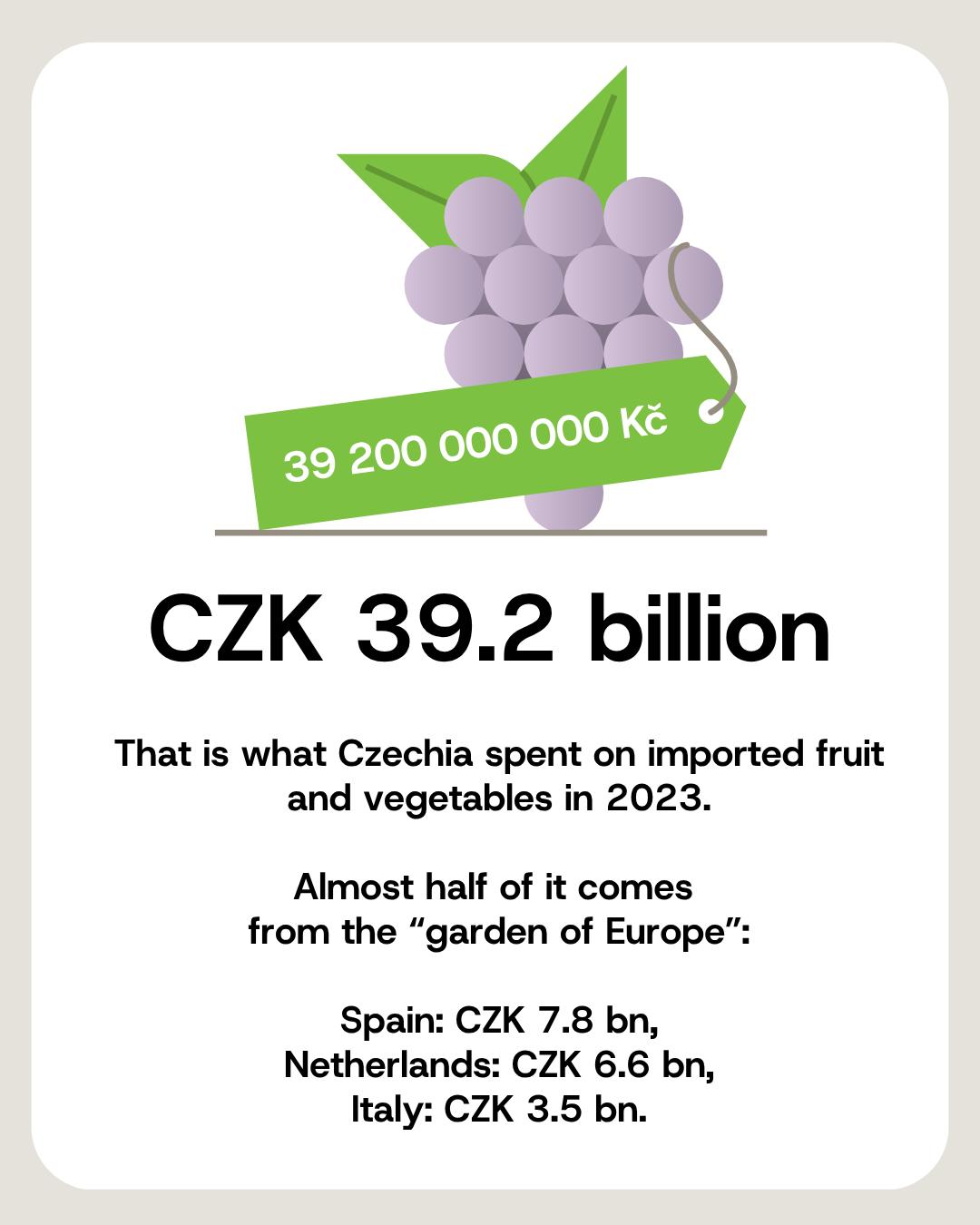
We cannot grow enough of our own crops, so two thirds of our fruit and vegetables are imported. In 2023 Czechia spent CZK 39.2 billion on imported produce. Almost half of it comes from the “garden of Europe”: Spain (CZK 7.8 bn), the Netherlands (CZK 6.6 bn) and Italy (CZK 3.5 bn).
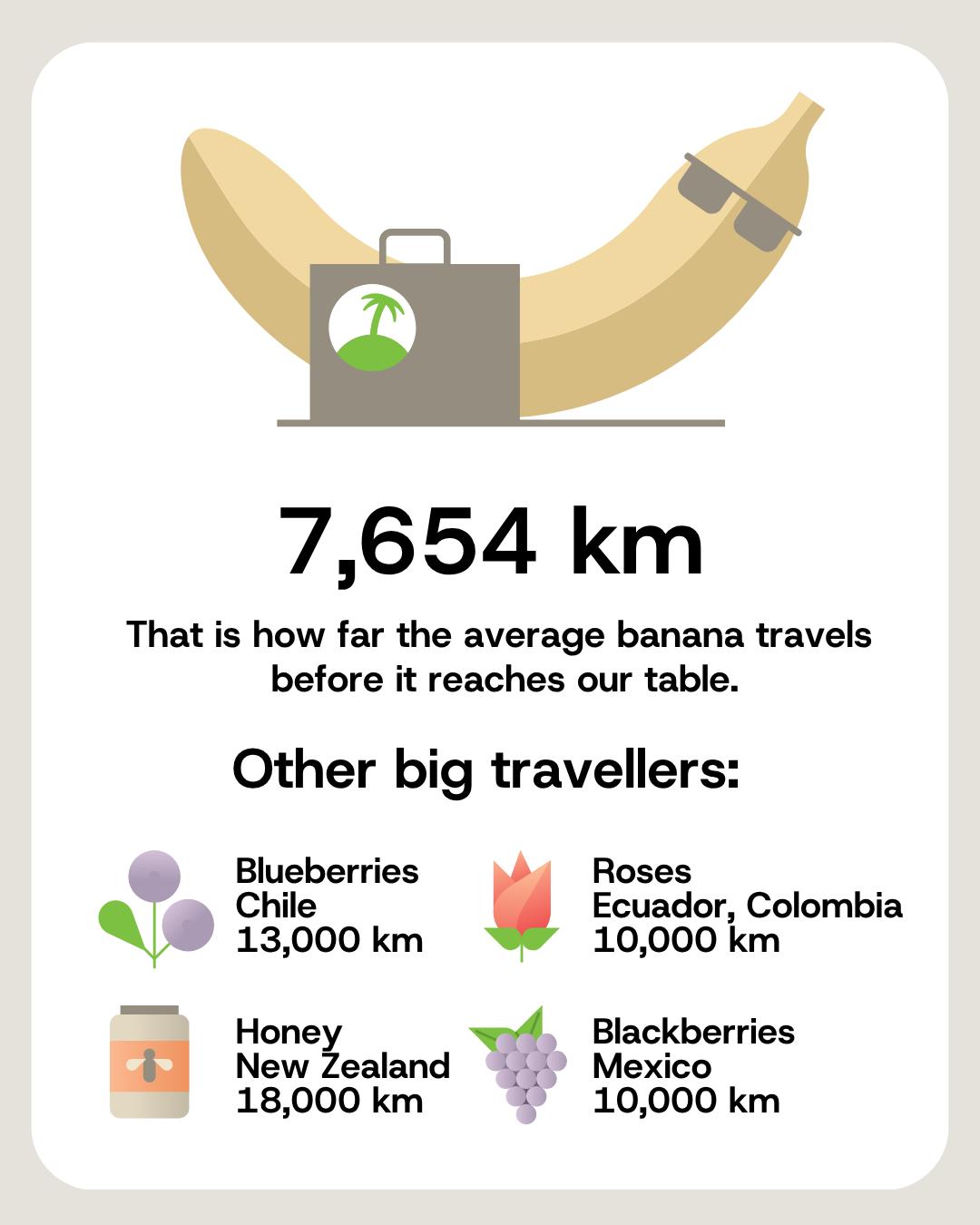
7,654 km is how far the average banana travels before it reaches our table. Other record‑breakers: blueberries from Chile (13,000 km), roses from Ecuador and Colombia (10,000 km), honey from New Zealand (18,000 km), blackberries from Mexico (10,000 km).
The downsides of importing
- Pollution — to have blueberries in March, they have to fly thousands of kilometres, and tonnes of emissions go into the air.
- Loss of flavour — fruit is picked unripe and “put to sleep” in chambers with minimal oxygen, often just 1%, to stop it ripening.
- Chemicals — to survive the journey, food is chemically treated, vacuum‑packed or ripened in a gas atmosphere.
What can we do
Eat with the seasons. Fruit and vegetables taste best and cost least at their natural harvest time.
- Eat seasonally: in winter, root vegetables, apples, sauerkraut.
- Buy locally: support Czech growers of apples, pears and plums.
- Use common sense: strawberries in winter simply taste like water.
Why we celebrate Valentine’s in February
“We wish all lovers love. But why celebrate Valentine’s in February? If we waited until summer, we could buy roses from local growers and support our own economy.”
Filip Zapletal, Sales Director, Logio
Sources: Czech Statistical Office (Foreign Trade 2023); Mike Berners‑Lee: How Bad Are Bananas? (2020); Cranfield University (Comparative Life Cycle Assessment of Roses); SeaRates; Google Maps.
Full infographic · PDF, 12 pages
All the slides in one file, with the figures and sources included.

Valentine's roses — full infographic (EN)
PDF, 1.93 MB
More supply chain insights
Supply chain glossary
Category Management
What category management is, how category roles work, and why a category plan only takes effect once its role is translated into replenishment parameters.
14. october 2026
2 min
Supply chain glossary
Assortment Rationalization
What assortment rationalization is, what a delisting decision has to estimate, and why the phase‑out of remaining stock decides whether the savings appear.
13. october 2026
2 min
Supply chain glossary
Key Value Items (KVI)
What key value items are, how retailers identify them from basket data, and why a KVI price cut cannot be judged by the item's own sales.
11. october 2026
3 min