Infographics
Dukovany expansion: why a nuclear build stands or falls on sequencing
The new Dukovany unit will not appear out of thin air. Without finished motorways, available aggregate and thousands of skilled people, the build slips by years. A look at the supply chain behind a nuclear project.
15. april 2026
4 min

The new nuclear unit at Dukovany will not appear out of thin air. It has to respect what this country and its infrastructure can actually deliver. Before the first components arrive, the roads, the rails and the people have to be ready.
The main reactor technology and key systems will be supplied by KHNP of South Korea. The project also counts on extensive involvement of Czech firms delivering selected components. What matters across the whole supply chain:
- Finish as much of the motorway network as possible and repair local roads in the affected region.
- Secure the availability of materials and coordinate their delivery to site.
- Plan and secure enough workers for both construction and later operation.
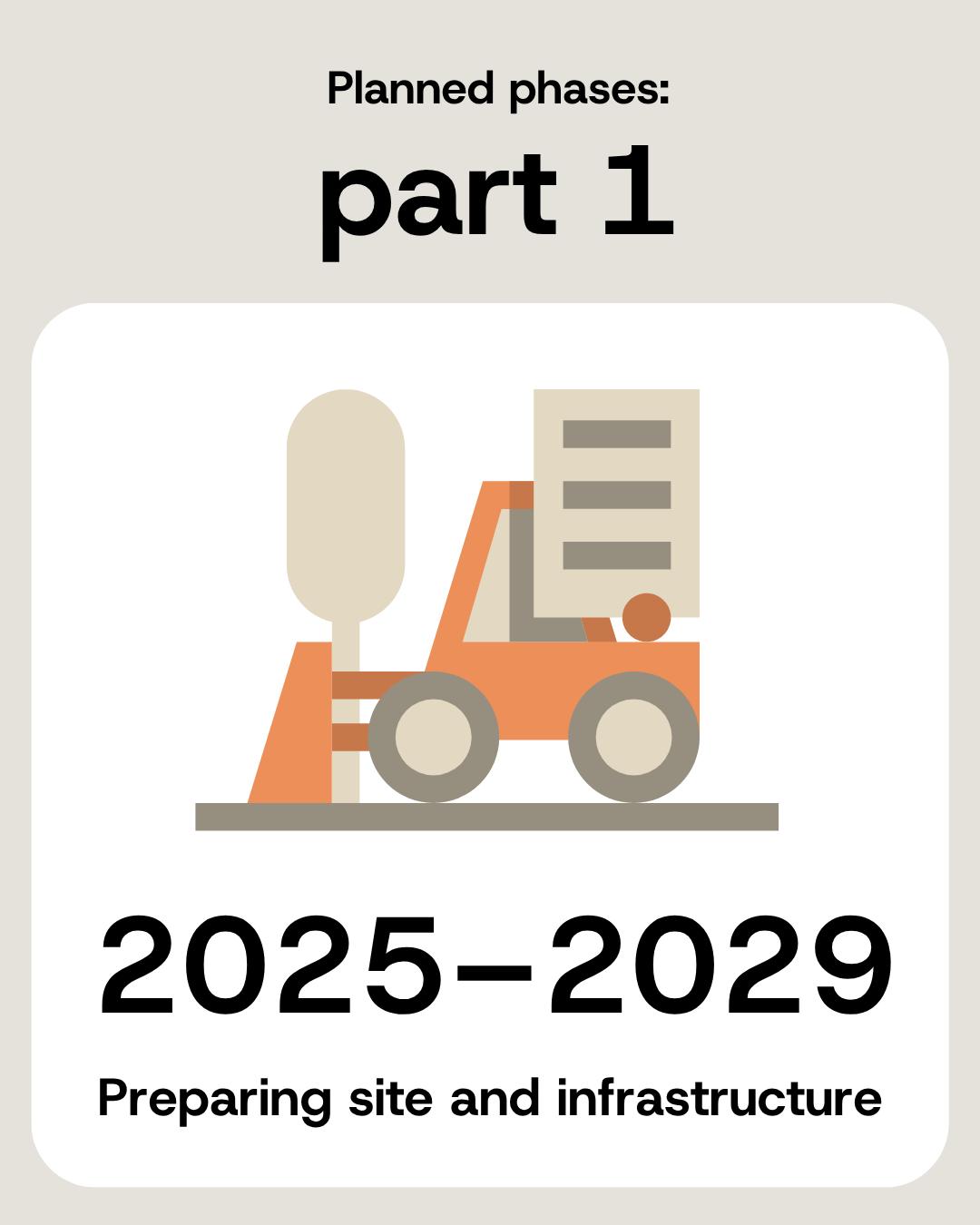
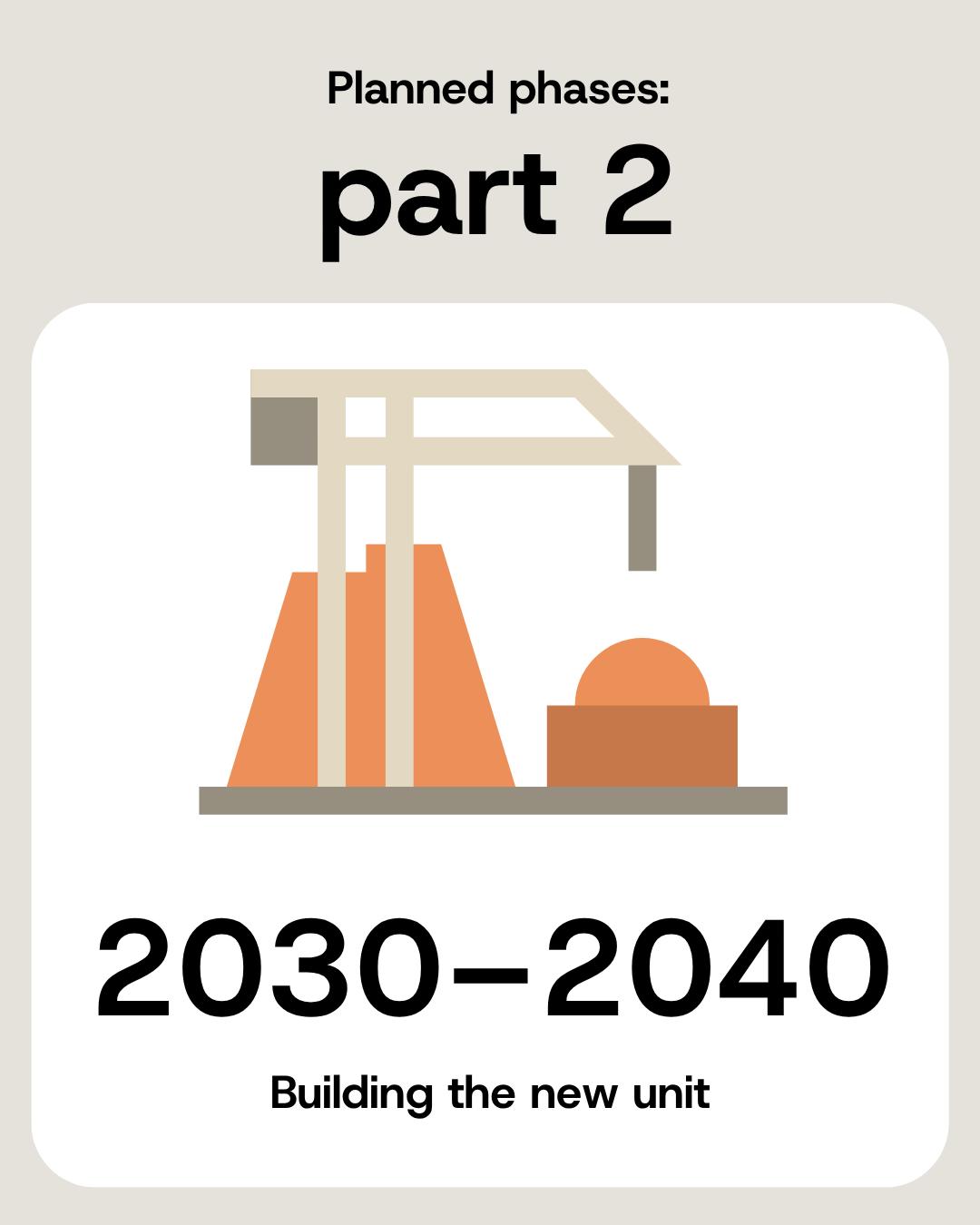
Planned stages: part 1 (2025–2029) — preparing the site and infrastructure; part 2 (2030–2040) — building the new unit.
1. Moving materials, technology and oversized loads
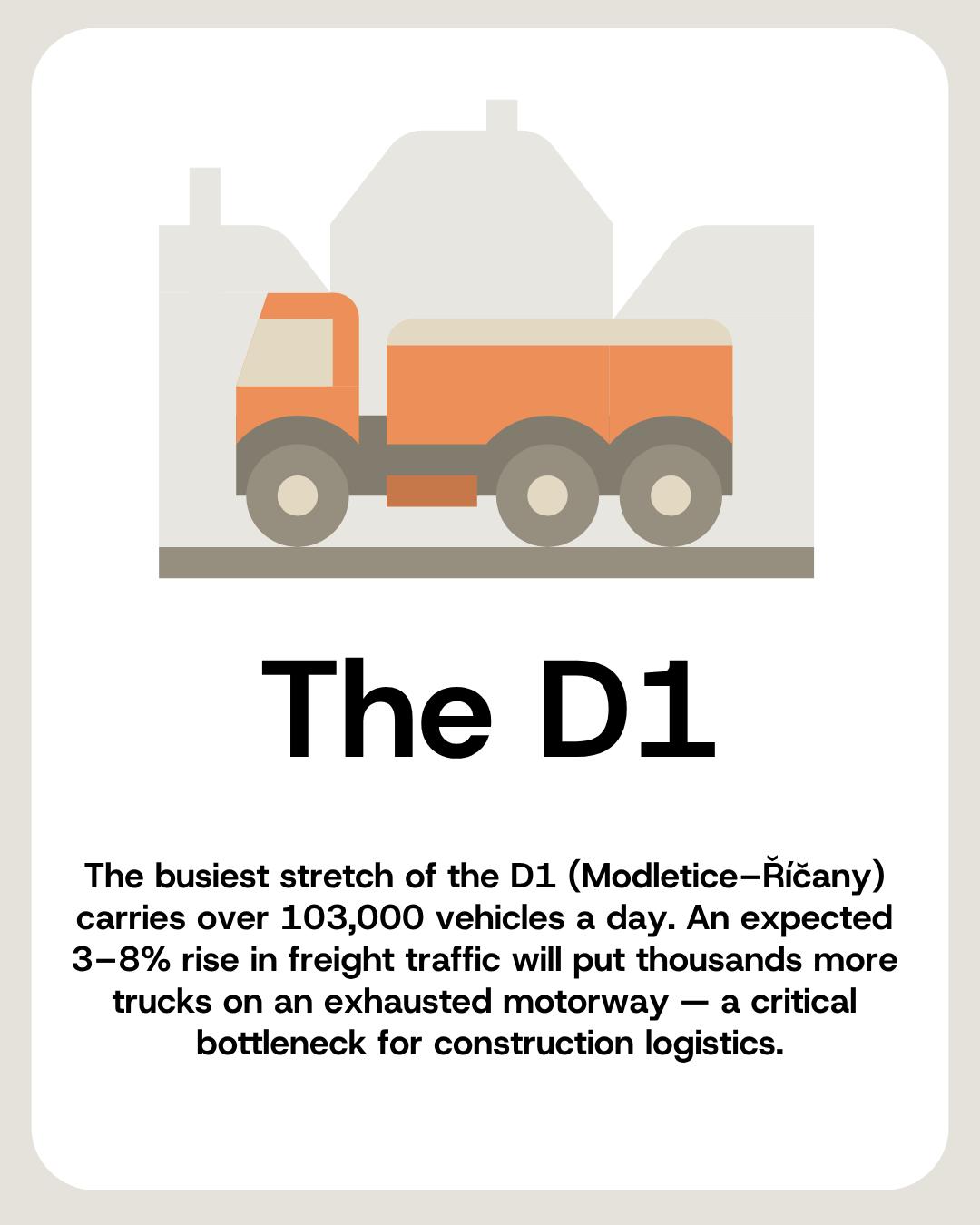
The D1. More than 103,000 vehicles a day pass through its busiest section (Modletice–Říčany). An expected 3–8% rise in freight traffic will put thousands more trucks onto an already exhausted motorway and create a critical bottleneck.
The D35. Only 89 km of 205 km is finished, with completion planned for 2028.
Neglected bridges. In the South Moravian Region 22.2% of bridges are damaged, and on key third‑class roads more than 35% — limited load capacity seriously threatens the flow of heavy components.
Strained rail capacity. The Děčín–Bad Schandau freight node is close to collapse and technical limits rule out extra trains. The Děčín navigation weir is still unbuilt and holds back river logistics.
2. Materials
Building two new units will take roughly 200,000–420,000 tonnes of aggregate (less than 2% of Czech annual production) and about 480,000 tonnes of concrete — the equivalent of 25,000 mixer trips. Availability can still be a problem: existing quarries in the region are at capacity and contractually committed, and no new quarry has opened in Czechia in the past 35 years. What matters is not the total tonnage but the regional availability of deposits, the logistics and the timing of deliveries.
3. Companies and workers
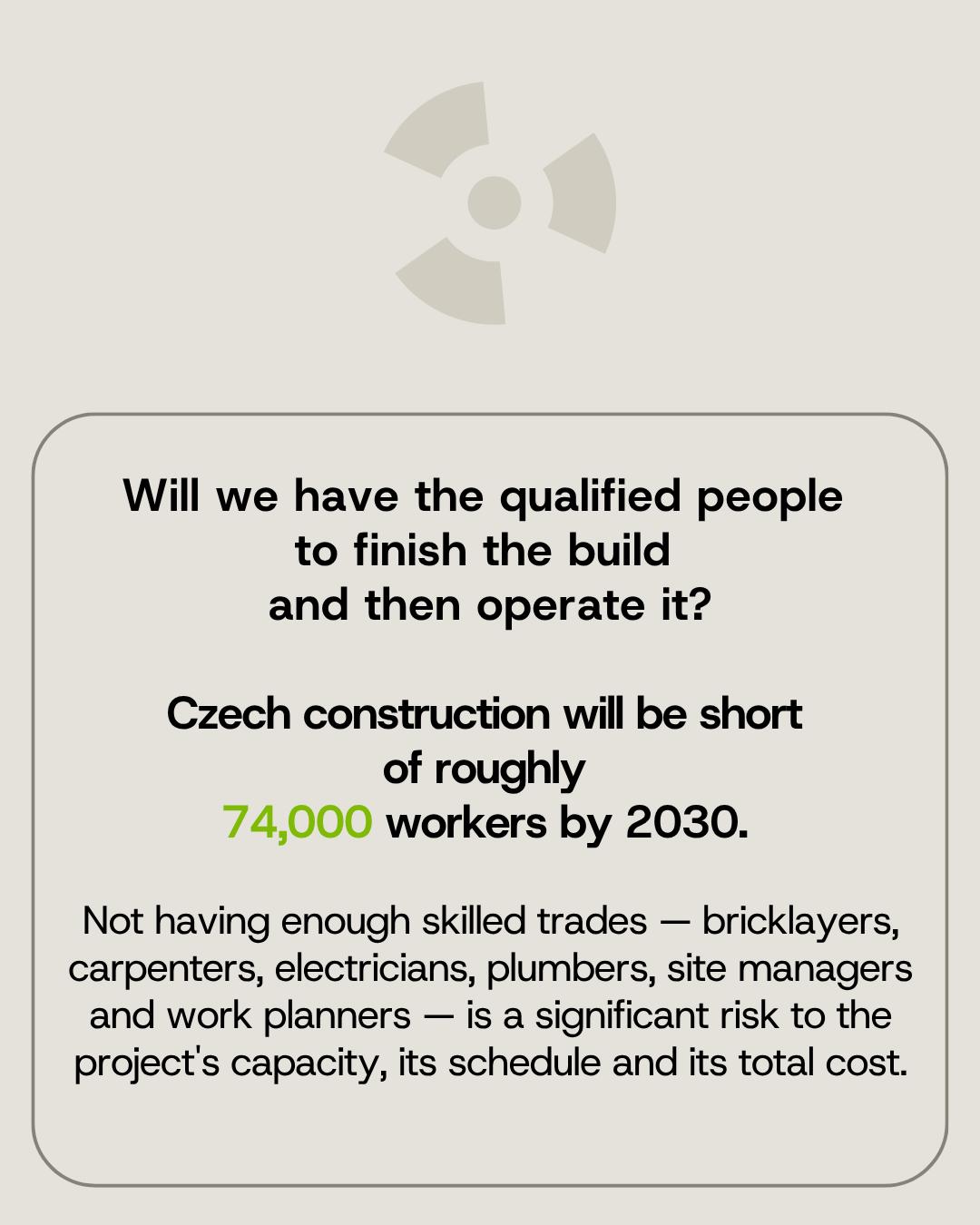
Czech firms are expected to take 50–65% of the contract value, and up to 36% of companies in the South Moravian Region and Vysočina are already tied to the Dukovany plant. Construction needs 7,000 workers for preparation and up to 6,000 on the build itself; operation then needs 4,000 highly qualified specialists, whom ČEZ plans to recruit over the next decade. The problem is that Czech construction will be short of roughly 74,000 workers by 2030 — a shortage of bricklayers, carpenters, electricians, plumbers and site managers is a serious risk to both the schedule and the cost.
4. Conclusion
Every year of delay in preparing infrastructure means as much as two years of delay on the build itself. Recruiting and training people cannot be accelerated overnight — technical and engineering trades take as much as seven years of education and practice. If we do not act now, Dukovany slips by over 3 years.
What has to start now
“For the material to reach the site at all, we have to start investing in transport infrastructure, launch a recruitment programme (and perhaps speed up the legal framework for employing foreigners) and train workers — all at the same time. Otherwise the new unit slips by several years. Not because of the reactor or the production technology, but because the preparation this kind of project requires was neglected.”
Přemysl Zeman, Chief Strategy Officer, Logio
Sources: Zdopravy.cz; Wikipedia (D35, Děčín weir); Silnice‑zeleznice.cz; Businessinfo.cz; Czech Statistical Office; Eceta.cz; Centrum.cz; Ekonomický deník; Novinky.cz; ČEZ; Ekolist; md.gov.cz.
Full infographic · PDF, 25 pages
All the slides in one file, with the figures and sources included.

Dukovany expansion — full infographic (EN)
PDF, 6.23 MB
More supply chain insights
Supply chain glossary
Category Management
What category management is, how category roles work, and why a category plan only takes effect once its role is translated into replenishment parameters.
14. october 2026
2 min
Supply chain glossary
Assortment Rationalization
What assortment rationalization is, what a delisting decision has to estimate, and why the phase‑out of remaining stock decides whether the savings appear.
13. october 2026
2 min
Supply chain glossary
Key Value Items (KVI)
What key value items are, how retailers identify them from basket data, and why a KVI price cut cannot be judged by the item's own sales.
11. october 2026
3 min