Infographics
10 pumpkin facts you didn’t know: from field to warehouse to Halloween
A pumpkin is botanically a fruit, it is 90% water and it sells for only a few weeks a year. For logistics, that means heavy, fragile cargo with a low value per kilo. Here are ten things you may not know about it.
26. october 2026
4 min
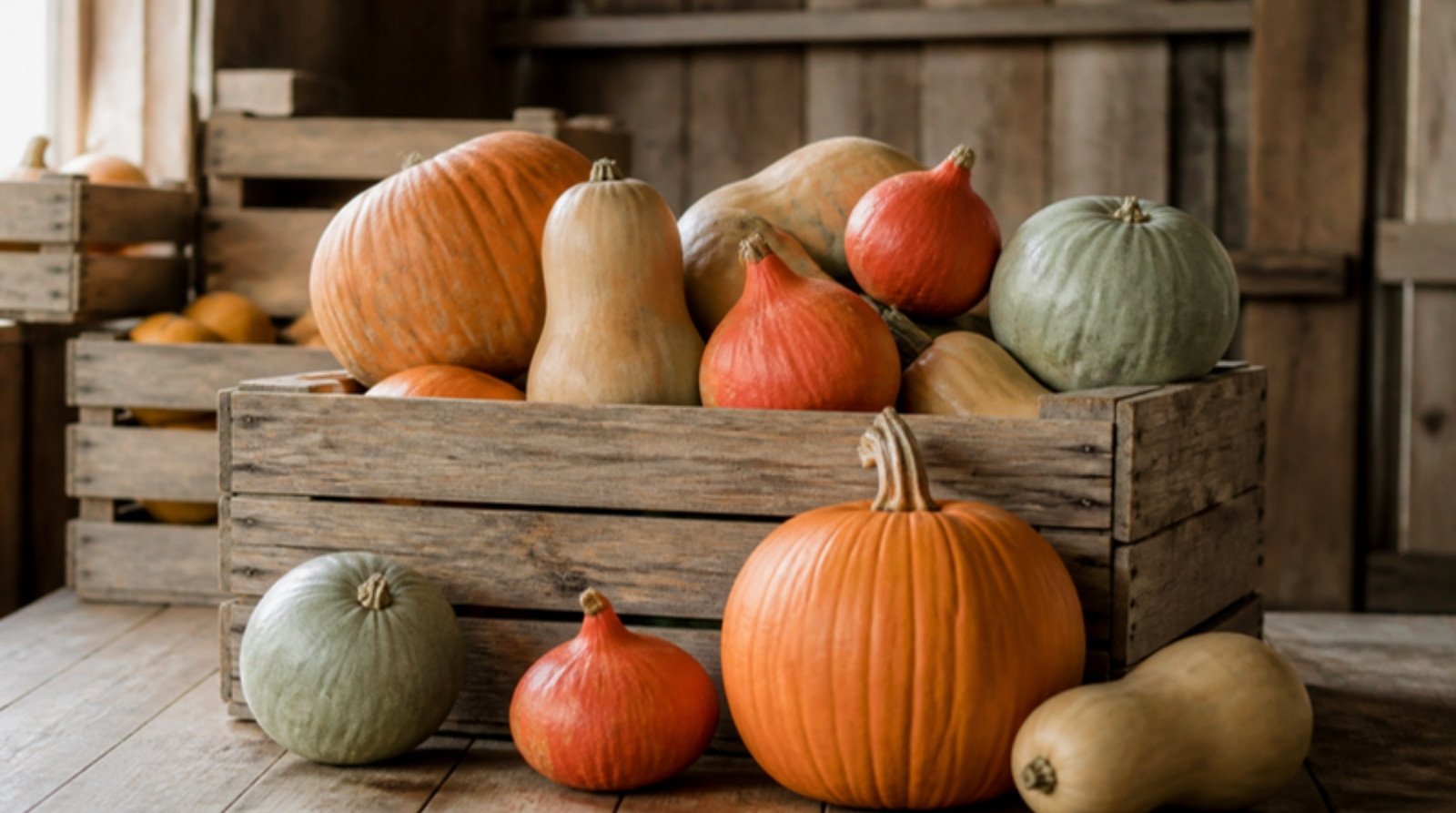
At the end of October, pumpkins are on store shelves, on doorsteps and on plates. Every one of them has to be harvested, stored and shipped, and it is heavy, bulky cargo that bruises easily and sells for just a few weeks a year. How did an American crop become the symbol of Halloween, and what does a pumpkin mean for logistics?
Why a pumpkin is a fruit, not a vegetable
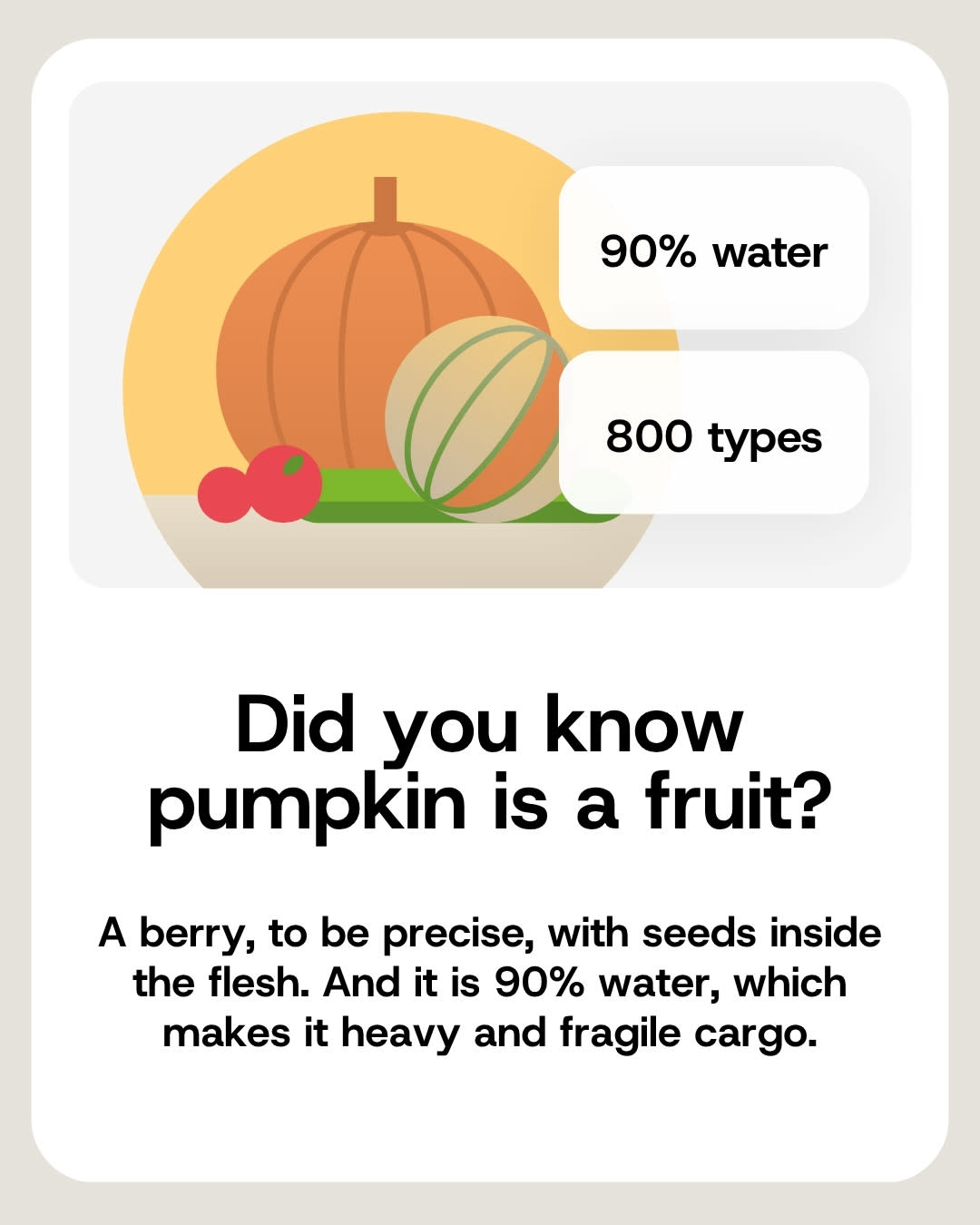
Botanically, a pumpkin is a berry, because its seeds sit inside the flesh. It is 90% water, so it is heavy for its size and fragile to handle. There are roughly 800 varieties.
Where pumpkins come from
People in Central and South America domesticated pumpkins more than 10,000 years ago. That makes them older than the Egyptian pyramids and one of the oldest cultivated crops. Sailors brought them to Europe only after the discovery of the Americas.
How the turnip became a Halloween pumpkin
Lanterns by the door were meant to keep evil spirits away during the Celtic festival of Samhain. According to legend, “Stingy Jack” wandered the land with an ember in a hollow turnip, so in Ireland and Scotland lanterns were carved from beets, turnips and swedes. Immigrants in America later switched to pumpkins, which were bigger and easier to carve.
Why pumpkins are awkward cargo
Pumpkins are heavy, bulky and 90% water. They are cheap per kilo but expensive to transport, and they bruise easily. Depending on the variety, they are picked by hand or, increasingly, by machine.
In warehouses and in transit, they travel in bulk bins and returnable crates, are moved by forklift and stacked carefully to prevent bruising. A record‑breaker can only be lifted by crane.
How much the heaviest pumpkin weighs
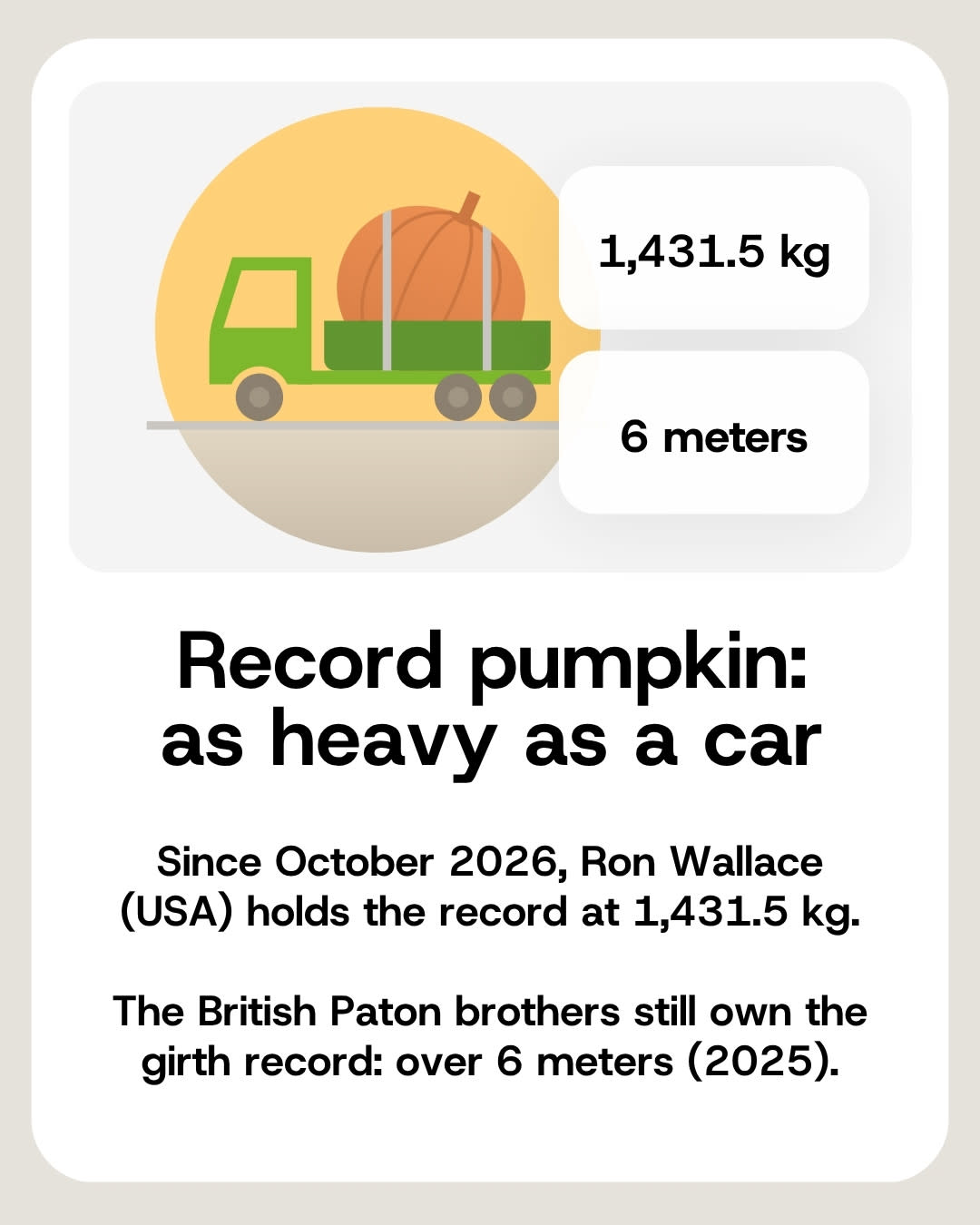
Since October 2026, the world record has been held by Ron Wallace (USA) with a pumpkin weighing 1,431.5 kg, about as much as a car. The British Paton brothers still hold the circumference record from 2025: over 6 meters.
How long a pumpkin keeps in storage
An uncarved, ripe pumpkin is a storage champion: kept dry and cool, it can last until spring. Once you cut into it, its shelf life drops to days.
Who grows more pumpkins, Europe or the US
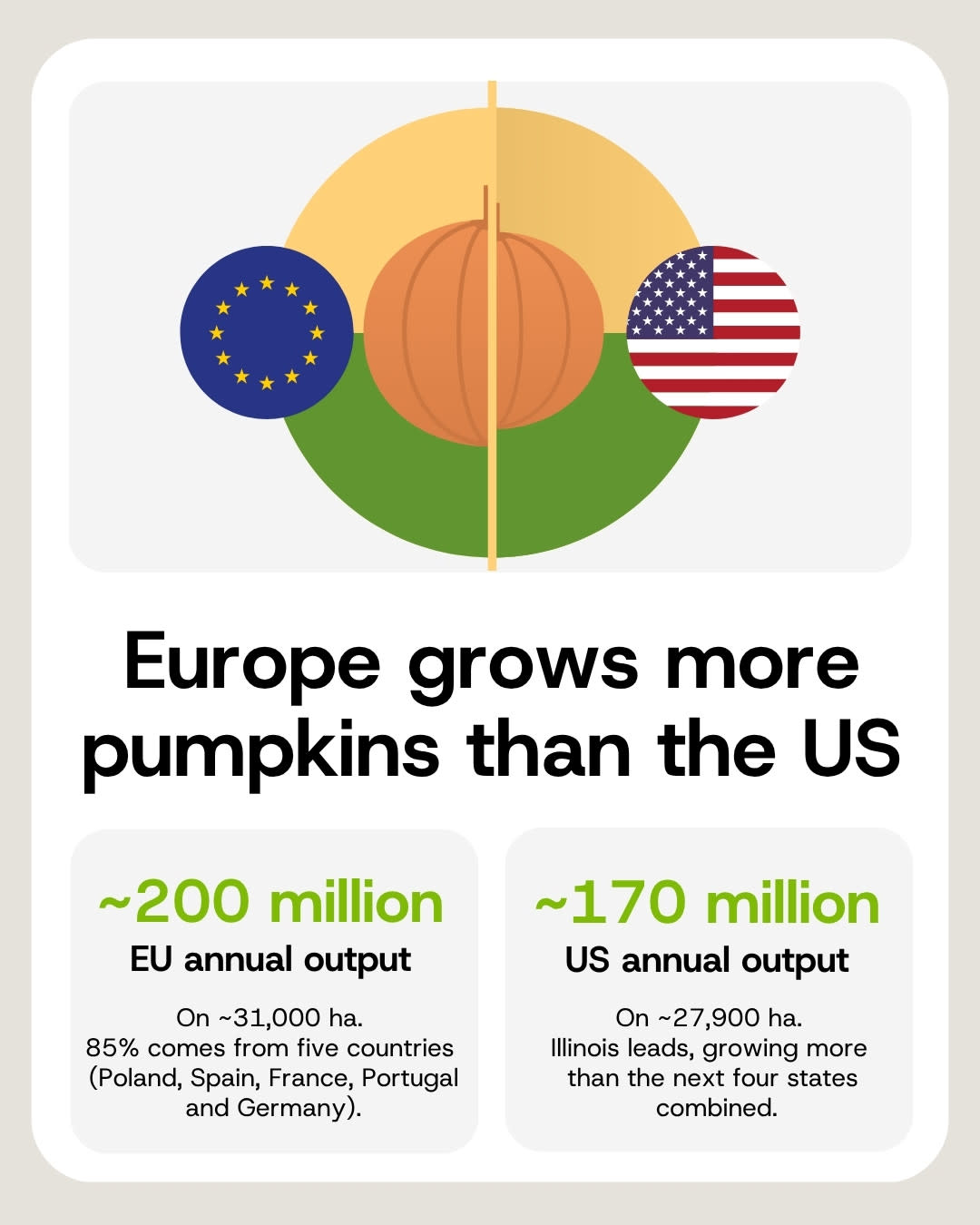
The EU grows roughly 200 million pumpkins a year on about 31,000 ha, and 85% of them come from five countries: Poland, Spain, France, Portugal and Germany. The US produces around 170 million on 27,900 ha. Illinois leads the US states, growing more than the next four producing states combined.
Unit counts are converted from weight, assuming an average pumpkin of about 3.8 kg.
How much the US and Europe spend on Halloween
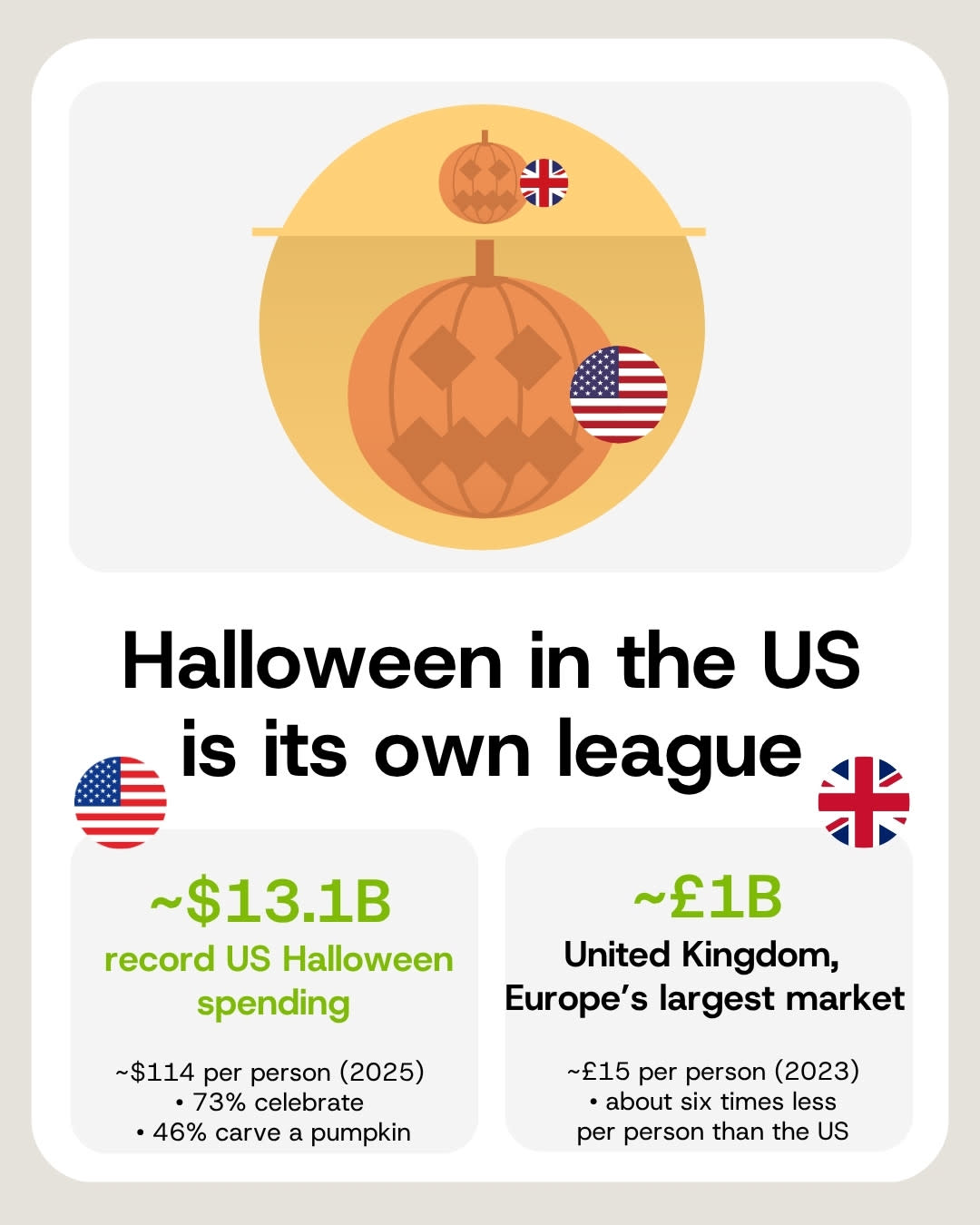
According to the NRF survey, Americans were expected to spend a record $13.1 billion on Halloween 2025, about $114 per person. 73% of Americans celebrate and 46% carve a pumpkin. Europe’s largest Halloween market is the UK, at around £1 billion, but spending per person is about £15 (2023), roughly six times less than in the US.
What to do with a pumpkin after Halloween
Flesh, seeds and skin can all be used: flesh for soup, seeds for roasting, skins for chips. Hokkaido doesn’t even need peeling. A carved pumpkin belongs in the compost or the organic waste bin.
Bonus: how to plan sales that last a few weeks
Pumpkin season is extremely short. Order too few and you lose revenue; order too many and you are left with dead stock. Getting the demand forecast right, so pumpkins sell at the right time, is now easier to leave to AI, for example Veritico STOCK, which forecasts demand and proposes replenishment.
Sources
- US production and market: USDA ERS (2024), Pumpkins: Background & Statistics
- EU production: Eurostat; unit counts based on an average weight of about 3.8 kg
- Halloween in the US: NRF (2025), Halloween spending survey
- Halloween in the UK: Statista
- Record pumpkins: Guinness World Records (2026)
- Growing and storage: industry sources, 2018–2026
- Sales planning: Logio / Veritico STOCK
Full infographic · PDF, 14 pages
All 10 facts plus the bonus in one file, sources included. Easy to browse or share with colleagues.
Infographic: 10 pumpkin facts you didn’t know (EN)
PDF, 1.44 MB
More supply chain insights
Supply chain glossary
Integrated Business Planning (IBP)
What integrated business planning is, which steps it adds to S&OP, and why a plan that holds in units can still miss the budget.
25. october 2026
3 min
Supply chain glossary
Master Production Schedule (MPS)
What a master production schedule is, how time fences limit changes to it, and what changeovers cost when the schedule is cut too fine.
25. october 2026
3 min
Supply chain glossary
Product Portfolio Optimization
What product portfolio optimization is, how it differs from store assortment, and why each extra variant raises inventory even when sales stay flat.
19. october 2026
3 min